
When planning a construction project, whether residential or commercial, many people focus primarily on construction costs and overlook the significant value that professional architectural consultancy brings to the table. This oversight can be costly. An experienced architecture firm doesn’t just create beautiful designs — they provide strategic guidance that prevents expensive mistakes, streamlines the construction process, and ultimately saves both time and money.
In this article, we’ll explore the specific ways that hiring an experienced architecture firm delivers measurable savings throughout your construction project, from initial planning through final completion.
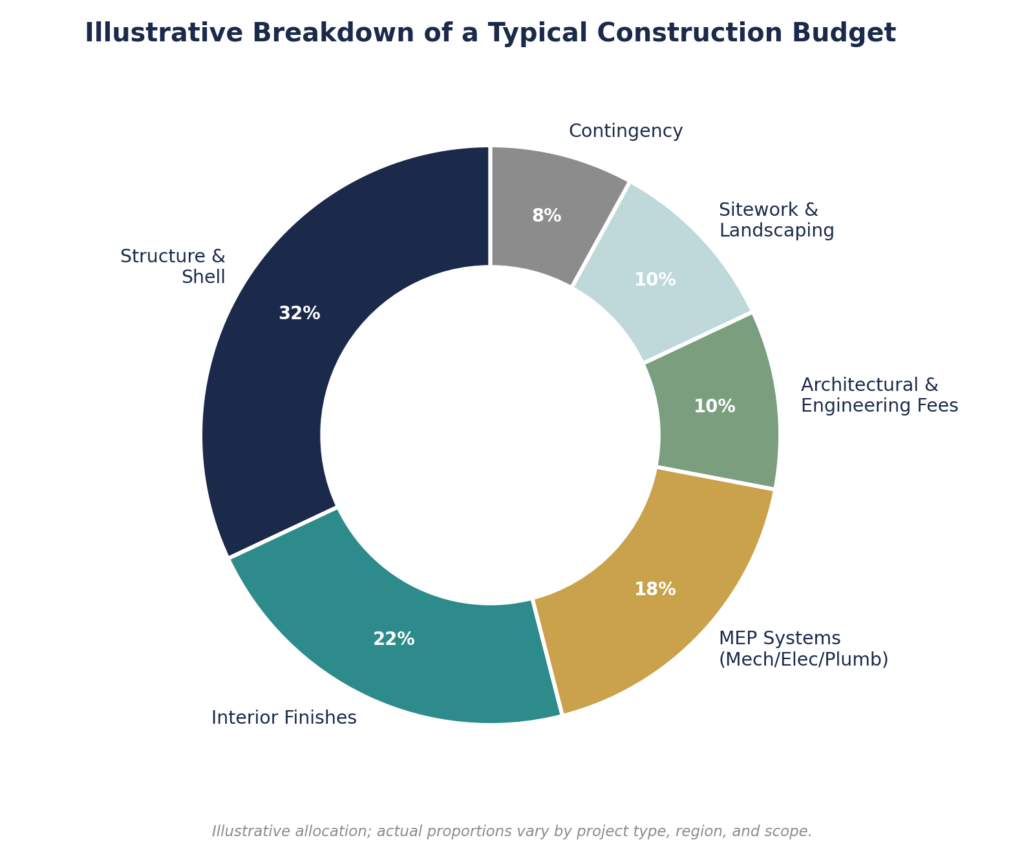
Figure 5.1 — Illustrative breakdown of where a typical construction budget is allocated.
The Hidden Costs of Skipping Professional Architectural Consultancy
Table 5.1 — Where Skipping Architectural Consultancy Gets Expensive
| Risk Area | Potential Consequence | How Architectural Consultancy Helps |
|---|---|---|
| Budgeting | Unrealistic budget, mid-project overruns | Accurate upfront cost planning |
| Design Changes | Costly revisions during construction | Thorough upfront planning & documentation |
| Permitting | Delays from code non-compliance | Familiarity with local codes & processes |
| Structural Efficiency | Wasted material, higher costs | Optimized, efficient structural design |
| Contractor Coordination | Miscommunication, rework | Centralized coordination role |
Some property owners attempt to save money by skipping professional architectural services altogether, opting instead for generic building plans or relying solely on a contractor’s in-house design capabilities. While this approach may seem cost-effective initially, it frequently results in far greater expenses down the line.
Common issues that arise from inadequate design planning include inefficient space utilization, code compliance problems, structural inefficiencies, and design changes required mid-construction — all of which can quickly erode any initial savings and significantly extend project timelines.
1. Accurate Budgeting from the Start
One of the most valuable contributions of an experienced architecture firm is accurate, realistic budgeting from the earliest stages of a project. Architects with strong construction knowledge can anticipate costs associated with different design choices, materials, and structural systems, helping clients make informed decisions before construction begins.
This proactive approach to construction planning prevents the common scenario where projects run significantly over budget due to unforeseen costs discovered mid-construction, when changes become far more expensive to implement.
2. Preventing Costly Design Changes During Construction
Design changes made during construction are notoriously expensive, often costing multiples of what the same change would have cost during the design phase. Experienced architects work through potential issues thoroughly during the planning process, using detailed construction documentation and, increasingly, 3D visualization tools to identify and resolve problems before ground is even broken.
This thorough upfront planning dramatically reduces the likelihood of costly mid-construction revisions, keeping projects on budget and on schedule.
3. Navigating Zoning and Permitting Efficiently
Zoning regulations and building permit requirements vary significantly by location and can be a major source of delays for property owners unfamiliar with local processes. An experienced architecture firm brings established relationships with local building departments and deep familiarity with regulatory requirements, streamlining what can otherwise be a slow and frustrating permitting process.
This expertise often results in faster permit approvals, avoiding costly delays that can add weeks or even months to a construction timeline.
4. Optimizing Structural Efficiency
Skilled architects understand how to design structures that are both aesthetically pleasing and structurally efficient, minimizing unnecessary material use while maintaining safety and durability. This optimization directly translates into construction cost savings, as efficient structural design requires less material and often simplifies the construction process.
Working closely with structural engineers, experienced architecture firms identify the most cost-effective structural solutions without compromising on design quality or safety standards.
5. Reducing Construction Waste Through Precise Planning
Detailed, well-coordinated architectural design and construction documentation significantly reduces material waste on the construction site. When plans are precise and comprehensive, contractors can order materials more accurately, reducing both waste and the associated costs of excess material disposal or emergency reordering.
This attention to detail during the design phase supports more efficient, cost-effective construction execution overall.
6. Value Engineering Without Compromising Quality
Experienced architecture firms are skilled at value engineering — the process of identifying cost-saving opportunities without sacrificing design quality or functionality. This might involve substituting materials with more cost-effective alternatives that achieve similar aesthetic or performance outcomes, or reimagining structural systems for greater efficiency.
This strategic approach to cost management ensures that budget constraints don’t force compromises on the aspects of design that matter most to the client.
7. Coordinating Multiple Contractors and Specialists
Large construction projects often involve numerous specialists — structural engineers, mechanical engineers, interior designers, landscape architects, and various contractors. An experienced architecture firm typically takes on a coordination role, ensuring all these parties are working from consistent, accurate information and that their work integrates seamlessly.
This coordination prevents costly miscommunications and conflicts between different specialists, which can otherwise result in construction delays and rework.
8. Construction Administration and Quality Control
Many architecture firms offer construction administration services, providing ongoing oversight throughout the building process to ensure the finished structure matches the approved architectural design. This includes regular site visits, review of contractor work, and prompt resolution of any issues that arise during construction.
This ongoing quality control catches potential problems early, before they become expensive to fix, and helps ensure the project stays on schedule and within budget.
9. Long-Term Cost Savings Through Better Design
Beyond immediate construction savings, professional architectural design also delivers long-term operational savings through thoughtful building design. Features like efficient space planning, natural lighting optimization, and energy-efficient systems reduce ongoing operating costs for the life of the building.
These long-term savings, while not immediately visible in the construction budget, represent significant value that generic or poorly planned designs simply cannot deliver.
10. Protecting Your Investment Through Risk Management
Construction projects carry inherent risks, from structural issues to regulatory compliance problems. An experienced architecture firm helps mitigate these risks through thorough planning, professional liability coverage, and adherence to established best practices.
This risk management protects property owners from potentially catastrophic costs associated with construction failures, code violations, or legal disputes — costs that can far exceed any savings gained from skipping professional architectural services.
Real-World Impact: Time Savings Add Up
Figure 5.2 — Illustrative project timeline with and without experienced architectural guidance.
Beyond cost savings, experienced architecture firms also significantly reduce overall project timelines. Their familiarity with efficient design processes, streamlined permitting, and effective contractor coordination means projects move through each phase more quickly than they would with less experienced guidance.
For commercial projects in particular, faster completion times translate directly into earlier revenue generation, whether through occupancy, leasing, or sales — making time savings a direct financial benefit alongside construction cost savings.
Choosing the Right Architecture Firm for Cost-Effective Design
Not all architectural consultancy services deliver the same level of value. When selecting an architecture firm, look for a team with demonstrated experience in projects similar to yours, strong relationships with local contractors and permitting authorities, and a track record of successfully managing project budgets and timelines.
Ask potential firms about their approach to value engineering, their experience with construction administration, and how they handle unexpected challenges that arise during construction. The right firm will view themselves as partners in protecting your investment, not just designers creating drawings.
Final Thoughts
While hiring an experienced architecture firm represents an upfront investment, the value they provide throughout the construction process — from accurate budgeting and efficient structural design to skilled contractor coordination and construction oversight — consistently delivers savings that far exceed their fees. Professional architectural consultancy isn’t an expense to be minimized; it’s a strategic investment that protects your project from costly mistakes, delays, and inefficiencies. Whether you’re planning a residential renovation or a large commercial development, partnering with the right architecture firm from the very beginning is one of the smartest decisions you can make for your construction project’s success.