
Climate change, rising energy costs, and growing environmental awareness have transformed sustainable architecture from a niche specialty into a mainstream expectation. Today, homeowners, developers, and businesses alike are prioritizing energy-efficient building design, not only to reduce their environmental footprint but also to lower operating costs and increase long-term property value.
In this article, we’ll explore what sustainable architecture really means, the key principles behind energy-efficient design, and why partnering with an architecture firm experienced in green building design is essential for creating structures that perform well today and remain relevant for decades to come.
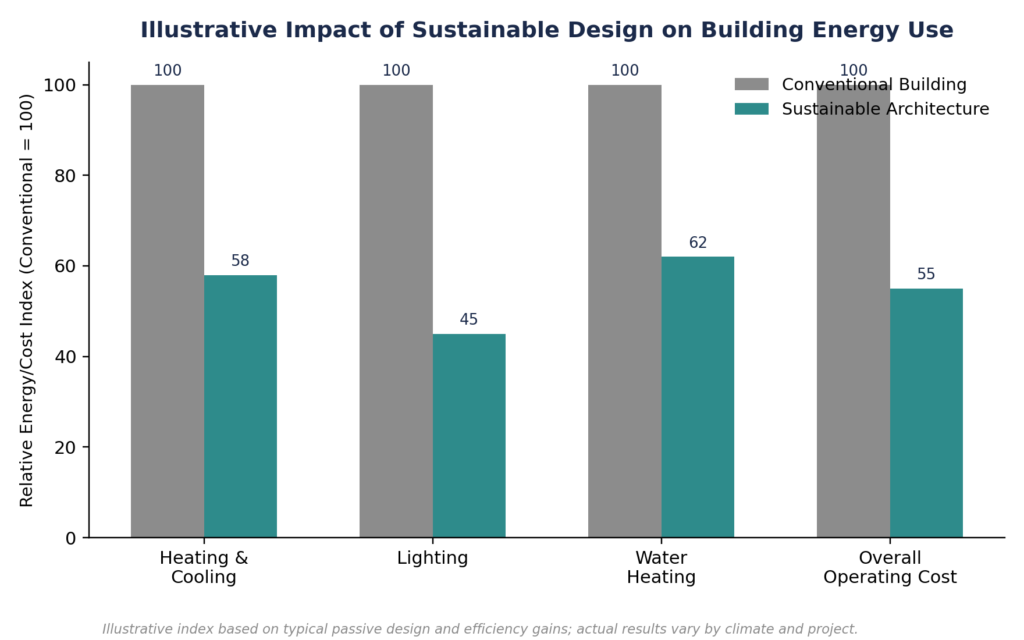
What Is Sustainable Architecture?
Sustainable architecture refers to the practice of designing buildings that minimize negative environmental impact through efficient use of energy, water, and building materials. This approach considers a building’s entire lifecycle — from material sourcing and construction through daily operation and eventual demolition or repurposing.
Rather than treating sustainability as an add-on feature, green building design integrates environmental considerations into every stage of the architectural design process, from initial site analysis to final material selection.
Why Energy Efficiency Matters More Than Ever
Buildings account for a substantial share of global energy consumption and greenhouse gas emissions. As energy costs continue to rise and environmental regulations tighten, energy-efficient design has become both an ethical imperative and a practical necessity.
For property owners, the benefits are tangible: lower utility bills, reduced maintenance costs, improved indoor comfort, and increased marketability. For architecture firms, sustainable design has become a core competency that clients increasingly expect as standard practice rather than a premium add-on.
Key Principles of Sustainable Architecture
Conventional vs. Sustainable Architecture Approaches
| Design Element | Conventional Approach | Sustainable Architecture Approach |
|---|---|---|
| Building Orientation | Rarely optimized for sun path | Passive solar orientation |
| Building Envelope | Standard insulation, more air leakage | High-performance insulation & air sealing |
| Energy Source | Grid power only | Renewable integration (solar, geothermal) |
| Water Systems | Standard fixtures, no reuse | Low-flow fixtures, rainwater harvesting, greywater recycling |
| Material Selection | Conventional, higher embodied carbon | Recycled/local, lower embodied carbon |
1. Passive Solar Design
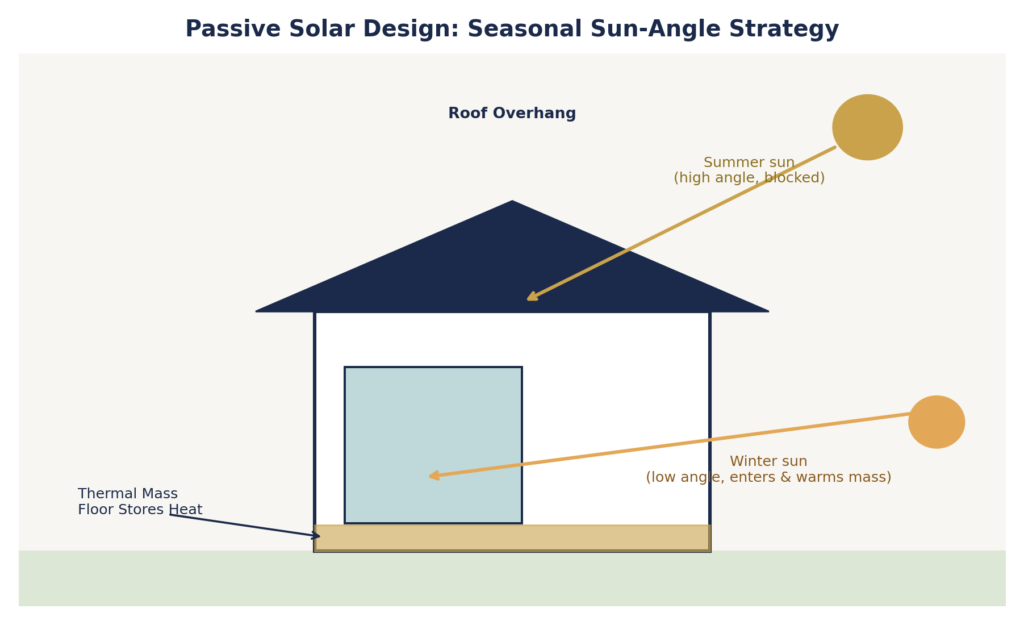
Passive solar design uses a building’s orientation, window placement, and thermal mass to naturally regulate temperature without relying heavily on mechanical heating and cooling systems. By carefully positioning windows to capture winter sun while shading against summer heat, architects can dramatically reduce a building’s energy consumption.
This principle is foundational to sustainable architecture and requires careful consideration during the earliest stages of building design, as it’s difficult and expensive to retrofit after construction.
2. High-Performance Building Envelope
The building envelope — walls, roof, windows, and foundation — serves as the primary barrier between interior and exterior environments. A well-designed, high-performance envelope minimizes heat loss in winter and heat gain in summer through superior insulation, air sealing, and high-quality windows.
Investing in a high-performance envelope often has a greater impact on long-term energy efficiency than any single mechanical system, making it a priority in sustainable architectural design.
3. Renewable Energy Integration
Modern sustainable architecture increasingly incorporates renewable energy systems directly into building design. Solar panels, geothermal heat pumps, and even small-scale wind turbines can be integrated seamlessly into both residential and commercial architecture when planned from the outset.
Architects with expertise in green building design know how to position and integrate these systems for maximum efficiency while maintaining aesthetic cohesion with the overall building design.
4. Water Efficiency and Management
Sustainable architecture extends beyond energy to encompass water conservation as well. This includes low-flow fixtures, rainwater harvesting systems, greywater recycling, and permeable landscaping that reduces stormwater runoff.
These systems not only conserve a precious resource but often qualify buildings for green certification programs, adding value and marketability to the finished project.
5. Sustainable Material Selection
The materials used in construction have significant environmental implications, from the energy required to manufacture and transport them to their long-term durability and recyclability. Sustainable architecture prioritizes materials with lower embodied carbon, such as sustainably sourced timber, recycled steel, and low-carbon concrete alternatives.
Local material sourcing also reduces transportation emissions while often supporting regional economies and craftsmanship traditions.
6. Natural Ventilation and Indoor Air Quality
Energy-efficient design doesn’t mean sealing a building off from the outside world entirely. Thoughtful natural ventilation strategies can reduce reliance on mechanical cooling systems while improving indoor air quality, a growing priority for occupant health and wellness.
Strategic window placement, operable skylights, and building orientation can work together to create natural airflow patterns that keep interior spaces comfortable with minimal energy input.
The Business Case for Sustainable Architecture
Beyond environmental benefits, sustainable architecture makes strong financial sense. Energy-efficient buildings typically have lower operating costs over their lifespan, which is increasingly attractive to both homeowners and commercial investors. Green-certified buildings often command premium rental and resale values, as tenants and buyers recognize the long-term cost savings and improved comfort these buildings provide.
Additionally, many governments and municipalities offer tax incentives, rebates, and expedited permitting for projects that meet certain sustainability standards, further improving the financial case for green building design.
Green Building Certifications Worth Knowing
Various certification programs exist to formally recognize sustainable building practices, providing a benchmark for energy efficiency and environmental responsibility. While specific certification requirements vary by region and program, they generally evaluate factors like energy performance, water efficiency, material sustainability, and indoor environmental quality.
Working with an architecture firm experienced in these certification processes can help ensure your project meets relevant standards, whether you’re pursuing formal certification or simply aiming to incorporate best practices into your building design.
Sustainable Architecture in Residential Projects
For homeowners, sustainable architecture translates into practical benefits like lower monthly utility bills, improved indoor comfort, and reduced environmental impact. Features like passive solar design, high-performance insulation, and energy-efficient appliances can be incorporated into virtually any house design, regardless of architectural style.
Many homeowners are also drawn to sustainable architecture for its long-term value proposition — as energy costs continue to rise, an energy-efficient home becomes increasingly attractive to future buyers.
Sustainable Architecture in Commercial Projects
For commercial architecture, sustainability considerations often extend to occupant productivity and wellness alongside energy efficiency. Studies have consistently shown that employees in well-ventilated, naturally lit, and thermally comfortable buildings report higher satisfaction and productivity levels.
Commercial developers are increasingly recognizing that sustainable building design isn’t just an environmental consideration — it’s a competitive advantage in attracting and retaining quality tenants.
Overcoming Common Misconceptions
One persistent misconception about sustainable architecture is that it necessarily costs significantly more than conventional construction. While some green building features do carry higher upfront costs, many sustainable design strategies — like passive solar orientation and efficient space planning — actually require no additional cost, simply thoughtful design.
Additionally, the long-term operational savings from energy-efficient design often offset any initial premium within a few years, making sustainable architecture a sound long-term investment rather than an expensive luxury.
Working with an Architecture Firm on Sustainable Design
Successfully integrating sustainability into your building design requires working with an architecture firm that has genuine expertise in green building principles, not just superficial familiarity. Ask potential architects about their experience with energy modeling, sustainable material selection, and renewable energy integration.
A qualified firm will conduct thorough site analysis, consider your specific climate conditions, and develop a customized sustainability strategy tailored to your project’s goals and budget, rather than applying a one-size-fits-all approach.
Final Thoughts
Sustainable architecture represents the future of building design — not as a passing trend, but as a fundamental shift toward more responsible, efficient, and resilient construction practices. From passive solar design to renewable energy integration, the principles of green building design offer tangible benefits for both the environment and property owners’ bottom lines. Whether you’re planning a new residential home or a large-scale commercial development, incorporating sustainable architecture principles from the earliest design stages will result in a building that performs better, costs less to operate, and remains valuable and relevant for decades to come.